Sensor layer
Most service trips find nothing to do.
ClearPath is the platform that turns scheduled rounds into real-time, demand-triggered dispatch. It serves operations in waste and recycling, sharps and medical waste, restroom consumables, stadium and venue consumables, fleet fueling, and more.


The calendar runs the route.
A truck pulls up to a dumpster that isn’t full. A custodian walks into a restroom that’s still stocked. A fueler arrives at a vehicle that doesn’t need fuel.
The route was scheduled. The trip happened. The work was already done, didn’t need doing yet, or wasn’t supposed to get done at all.
This is how most fixed-path service operations still work. Calendar-based rounds. Fixed cadence. Every point checked whether or not it needs attention.
Most checks find nothing to do. The trips happen anyway, because nobody knows in advance which points need service.
The cost is labor paid for trips that didn’t need to happen.
The route was scheduled. The trip happened. The work was already done, didn’t need doing yet, or wasn’t supposed to get done at all.
This is how most fixed-path service operations still work. Calendar-based rounds. Fixed cadence. Every point checked whether or not it needs attention.
Most checks find nothing to do. The trips happen anyway, because nobody knows in advance which points need service.
The cost is labor paid for trips that didn’t need to happen.
ClearPath replaces the calendar with the signal.
This is a different way to run a service operation. The work reaches the team when conditions call for it. The calendar stops driving the route.
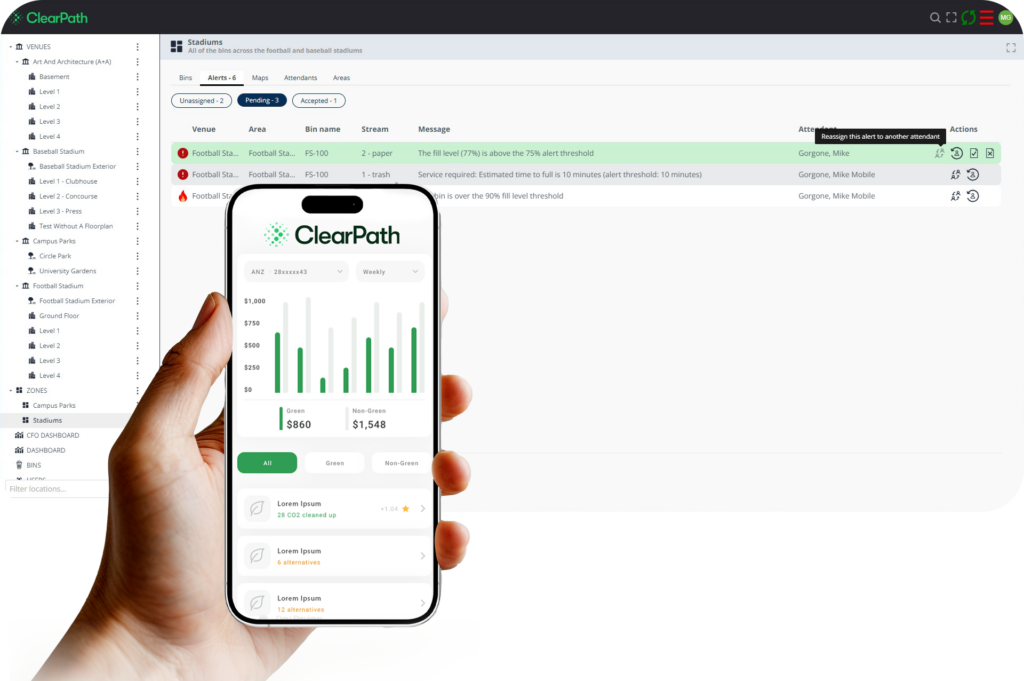
Sensors detect real-time conditions at every service point: a bin filling up, a dispenser running low, a tank reaching threshold. For assets that move, the platform tracks location as well.
ClearPath reads the signal, decides what needs attention, and dispatches the work to the people or trucks who do it. The route still exists. Only the points that need service get serviced. The trips that don’t matter stop happening.
ClearPath runs underneath the operation as the dispatch layer. The team you have already does the work. ClearPath tells them where to be.
Frontline workflows simplify. Service quality holds while labor drops.
Sensors detect real-time conditions at every service point: a bin filling up, a dispenser running low, a tank reaching threshold. For assets that move, the platform tracks location as well.
ClearPath reads the signal, decides what needs attention, and dispatches the work to the people or trucks who do it. The route still exists. Only the points that need service get serviced. The trips that don’t matter stop happening.
ClearPath runs underneath the operation as the dispatch layer. The team you have already does the work. ClearPath tells them where to be.
Frontline workflows simplify. Service quality holds while labor drops.
The Three ROI Engines
Three engines. One operational shift.
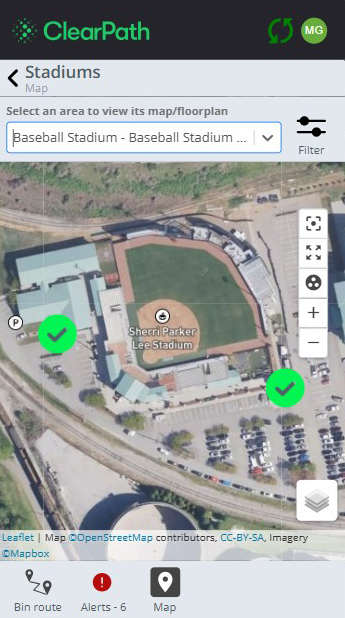
The trips that don't matter stop happening.
When dispatch runs on real-time conditions, the calendar shrinks. Service teams stop running circular routes that don’t change anything. Trucks stop arriving at points that don’t need them. The work that happens is the work that needs to happen.
Fuel costs drop. Vehicle wear drops. The labor hours spent on empty rounds drop with them
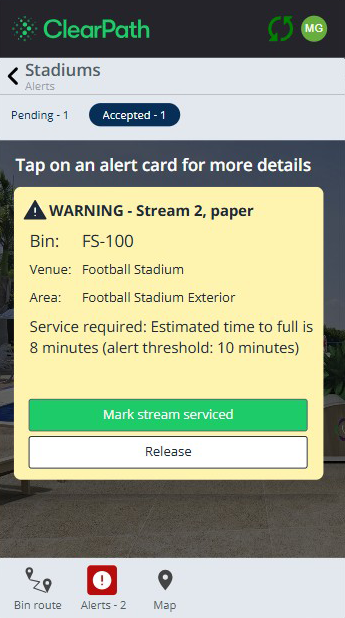
Coverage holds when demand spikes.
When dispatch runs on real-time conditions, the calendar shrinks. Service teams stop running circular routes that don’t change anything. Trucks stop arriving at points that don’t need them. The work that happens is the work that needs to happen.
Fuel costs drop. Vehicle wear drops. The labor hours spent on empty rounds drop with them
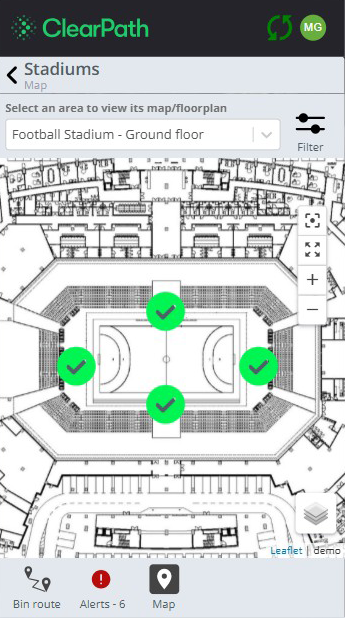
Your team gets to the work they couldn't before.
When dispatch runs on real-time conditions, the calendar shrinks. Service teams stop running circular routes that don’t change anything. Trucks stop arriving at points that don’t need them. The work that happens is the work that needs to happen.
Fuel costs drop. Vehicle wear drops. The labor hours spent on empty rounds drop with them
Coverage holds when demand spikes.
Calendar-based service is brittle under load. When demand spikes (a stadium event, a holiday weekend, a flu season filling restrooms faster than rounds can handle), scheduled rounds can’t expand fast enough. Bins overflow, dispensers run dry, and service quality breaks down at the moment it matters most.
ClearPath sees demand in real time and dispatches against it. The peak gets covered without staffing the baseline for the peak. Service holds when the operation needs it to.
Your team gets to the work they couldn't before.
The hours that disappear from wasted rounds don’t vanish from the budget. They become capacity. Some operations use that capacity to reduce headcount cost. Most use it to cover the work the team couldn’t get to before: deeper cleans, projects deferred for months, training time, quality work that always slips first under pressure.
The labor question doesn’t go away. It gets reframed. The team you have can do more of what matters.

Proof
What the shift looks like in practice
A mid-market equipment company with 20,000 units in the field adds ClearPath as a recurring service. Year one at 25% adoption: roughly $360,000 in new annual recurring revenue against equipment they already sold.
At 250,000 units, the number scales. At 400,000, it becomes multi-millions.
The math is the same at every scale. The installed base that previously generated revenue once generates it continuously. Every new unit added is another active stream added to the base.
Equipment companies turn their installed base into recurring revenue
ClearPath partners are the companies that already manufacture, distribute, or service the physical infrastructure their customers depend on: containers, dispensers, tanks, stations, service operations. ClearPath gives them a way to add a branded recurring service against an installed base that previously generated revenue only at the point of sale.
ClearPath provides the platform. The partner owns the customer relationship. The recurring revenue is new.
See Partner ModelBecome a Partner
FAQ's
Frequently Asked Questions
For Operations Teams
Where does ClearPath fit in my operation?
ClearPath sits underneath the dispatch layer. Sensors at every service point read real-time conditions, and ClearPath routes the team to the points that need attention. The work your team already does stays with your team; the calendar driving them does not. See the full platform overview.
What verticals does ClearPath serve?
ClearPath operates in waste and recycling, sharps and medical waste, restroom consumables, stadium and venue consumables, and fleet fueling, and more on the way. The platform is the same across all of them; the configuration and the buyer’s value drivers shift by vertical. See the verticals served.
What does a deployment look like?
Sensors get installed on or in the equipment being serviced. The dispatch layer reads the signals and assembles the work in real time. ClearPath splits across two surfaces. Mobile is the frontline tool where custodians and supervisors work the floor. Desktop is the management surface where operations managers, HR, and executives run configuration, dashboards, and reporting. Each role sees what serves their work. See how it works.
How do I get started?
Tell us about the operation: vertical, geography, basic scope. Depending on the vertical and location, you’ll work with a regional partner or directly with the team that built ClearPath. Get ClearPath.
For Equipment Companies
What does it mean to be a ClearPath partner?
A ClearPath partner brands the platform as their own and sells it as a recurring service against their existing installed base. ObjectSpectrum builds and operates the platform. The partner owns the customer relationship and the recurring revenue. Read the partner model.
What kind of company becomes a partner?
Equipment manufacturers, distributors, and service operators with a meaningful installed base in a fixed-path service category. What matters most is that leadership wants to build a recurring revenue stream. Their current technology stack and vertical are secondary. See the partner profile.
How do I start the partner conversation?
Share a few details about the company, vertical, installed base size, and how leadership is engaged. The ClearPath partner team will reach out to schedule a discovery conversation. Become a partner.
Get Started
Bring ClearPath to your operation
Tell us about the operation. Vertical, geography, basic scope. We’ll connect you with the right path to deploy, whether that’s through a regional partner or directly with the team that built ClearPath.
Get ClearPathsolutions
Find Your VerticalWaste and RecyclingSharps and Medical WasteRestroom ConsumablesVenue And Course ConsumablesFleet FuelingShredding And Document Destruction
Service runs on signal, not schedule.
Copyright © 2026 ObjectSpectrum. All rights reserved.